

The 10,000 hour rule, from Gladwell's Outliers, says mastery takes about 10,000 hours of practice - and the caveat matters more than the number. It is deliberate practice that counts: working at the edge of what you can do, with feedback. Ten thousand hours of comfortable repetition produces very little. For a student the useful version is that quality of practice, not hours logged, decides the grade.
What is this about?
What is hours the magic number for greatness?
As a follow up from last week’s article on choosing discipline over motivation, I want to introduce the concept of the 10,000 hour rule.
The 10,000 hour rule is a phrase made famous by Malcolm Gladwell’s book Outliers. It is one of my all time favourite books to read and you would often find me recommending the book if you have known me in any capacity.
The rule paraphrased from the book is:
If you want to become a master at anything (Hockey, dancing, being the best surgeon etc.), you must practise that skill for at least 10,000 hours
Scientists debate whether 10,000 hours is the magical figure to become an expert, but what is not in question is all great achievements in history have only been possible after years of dedicated effort on a particular craft.
I am aware Gladwell sensationalises this rule somewhat from the original research (see further reading below), but the general principle that talent is really an accumulation of practiced ability is something we can all utilise.
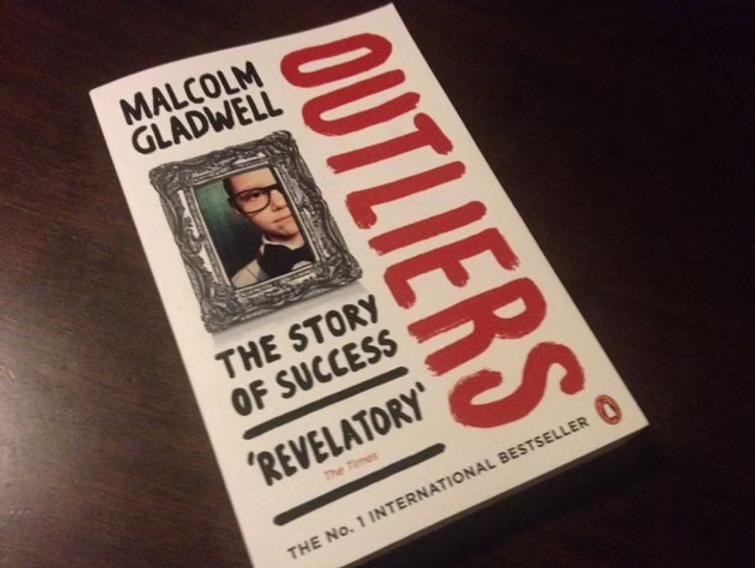
What are book recommendation: Outliers?
Check out this book as it covers a wide range of topics on how people become “successful”. It looks at how our success can be affected by practice, social factors, geographical factors and what our cultural heritage endows upon us.
Interestingly it also discusses what you might call emotional intelligence or practical intelligence and the role it plays in the lives of successful individuals. I think this is a topic I want to examine further in a future edition as it is something I personally found tough to get a grip on.
So do check out Outliers and let me know what you think of it once you have read it by commenting below.
Further Reading
1. The original research on deliberate practice to become expert performers.
What else is worth reading?
- 🧠Why learn?
- The Art of Sewing: A Gateway to Creativity and Practical Skills
- The Benefits of Learning to Cook: A Guide to Enhancing Your Life…
- The Benefits of Online Learning: Unlocking Flexibility,…
- The best time to plant a tree
What are the honest limits of this advice?
The evidence behind study methods is measured as an average across many students, not a promise about one. The EEF toolkit reports months of additional progress on average, with real variation underneath. What works also depends on the subject and where the gaps are.
The national picture, measured at the end of primary school:
“In 2025, 62% of pupils met the expected standard in all of reading, writing and maths, up from 61% in 2024.” — DfE, Key stage 2 attainment
Where can you check this at source?
How much a study method is actually worth has been measured. These are the sources that measure it:
- EEF — Teaching and Learning Toolkit — what the evidence says each intervention is worth, in months of progress
- DfE — Key stage 2 attainment — how many pupils meet the expected standard, by year
- gov.uk — Qualification results in England — the headline GCSE and A-Level figures for the current series